Bypass a BIOS password
In this tutorial, LiteInjector sits on the instruction bus of a VexRiscv CPU, between the CPU and the Wishbone bus. By replacing an instruction while the CPU fetches it, the emulator changes the control flow of the software, like an instruction skip or corruption caused by a physical fault.
The target is the LiteX BIOS, modified to add an unlock command that checks a password. The goal: make the BIOS accept a wrong password.

You need: a Digilent Basys3 board, a USB-UART adapter for the UART bridge, and the installation done. The files are in examples/poc_basys3_vexriscv.
Build the SoC
Section titled “Build the SoC”The modified BIOS is provided as a binary (software/app.bin) and is stored in the ROM of the SoC.
$ cd liteinjector/examples/poc_basys3_vexriscv$ ./digilent_basys3.py --csr-csv=csr.csv --integrated-rom-init=software/app.bin --build --load$ litex_term /dev/ttyUSB0You are now in the BIOS console: unlock <password> is the command to attack, help lists the others.
Find the target instruction
Section titled “Find the target instruction”The password check ends with a conditional branch. Disassembling the BIOS (here with Ghidra) shows the instruction to target, and LiteScope gives the address the CPU fetches it from: 0x0000037A.
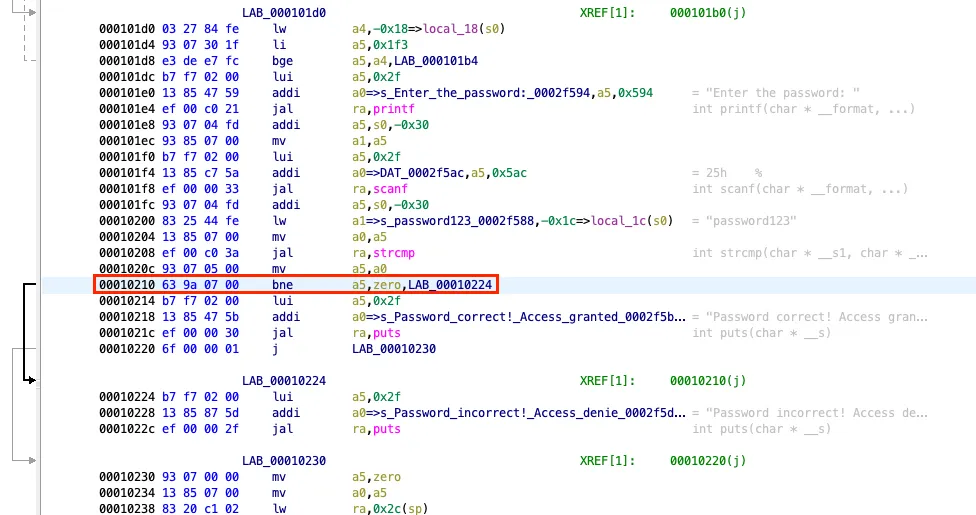
Replacing this branch by the opposite condition (opcode 0x00050C63) makes the check succeed when the password is wrong.
Attack
Section titled “Attack”-
Start
litex_serveron the UART bridge, in its own terminal.Terminal window $ litex_server --uart --uart-port /dev/ttyUSB1 -
Arm the emulator: when the CPU presents address
0x0000037Aon the instruction bus, replace the data returned one cycle later by the new instruction.Terminal window $ liteinjector_cli run --when ibus_adr=0x0000037A --offset 1 \--fault bit-value:ibus_dat_r=0x00050C63 -
Type
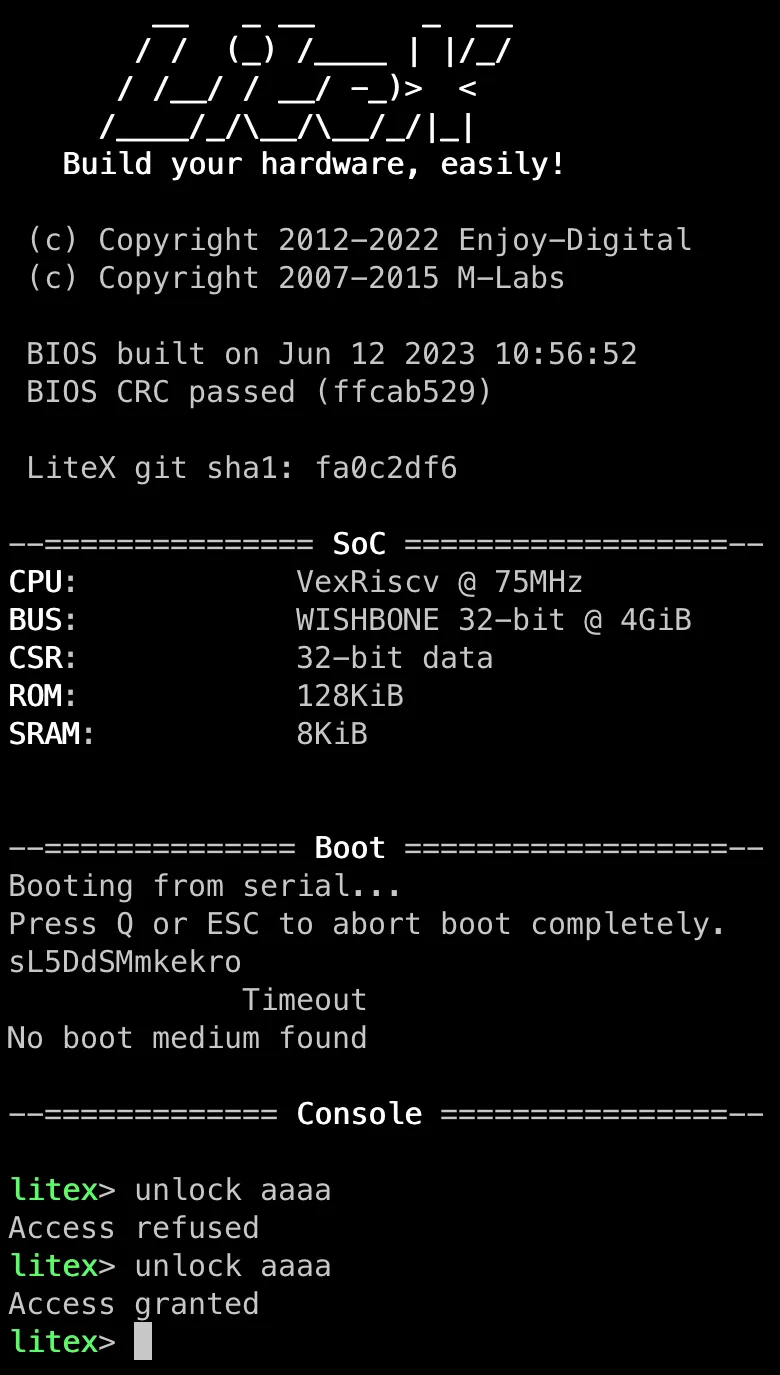
unlockwith a wrong password in the BIOS console.
Going further
Section titled “Going further”Replacing the instruction requires knowing the right opcode. A more realistic attacker model flips bits: the campaign tutorial flips every bit of this instruction in turn and reports which ones bypass the check.